Pages

Showing posts with label Soldering. Show all posts

Friday, 17 May 2024

Reusing Components? Soldering Torture Test Shows Why You Can

While I prefer to use new parts, for many years I salvaged parts from PCB's without issue. Even today when I am developing something I recover parts as needed if they are not to hand. When you live in the most remote capital city in the world and freight is expensive and slow it makes sense to get something finished instead of waiting.

It occurred to me that I had never seen, or experienced, any reason why recycled components fail. So I thought up a torture test for a device with many transistors, a voltage regulator. After you see what transpired I think it will reassure you about using recycled or salvaged components. The parts survived well beyond what I expected, even shrugging off my efforts to make them fail.

It might not be good enough for NASA but as a hobbyist if it's good enough for me then it's good enough for you.


Friday, 5 April 2024

A Video Demonstration of Surface Mount Soldering

Soldering is one of those topics where experience means you discount just about everything that other  people recommend. From arguments about which flux is better to which brand of solder, to soldering tips to rework stations, the entire subject is controversial.

So let's strip out the bull and just get down to some simple facts and demonstrations. 

Flux. 

If you're hand soldering a pcb and using a quality solder you hardly ever need it. With a low quality or very old solder you might need some. But not always. However, for wicking solder it's pretty much essential and useful for removing solder bridges with the iron tip.

Expensive or cheap, all flux suitable for soldering electronics works. Even rosin dissolved in methylated spirits works well. I myself can't see the point in expensive fluxes and I chose based on bang for buck.

Solder

Leave lead free soldering to the factories. 60/40 is your starting point. I wouldn't shift from that until it was necessary. If you already have a few rolls of different solder then try this: take a 10-15mm length of solder and put the tip of a hot iron on one end. Good solder will drag itself onto the tip as it melts. Or take a 10-15mm length and apply hot air or other form of heat as it rests along some copper pads on a pcb. Experiment with temperature and flux and see how it flows differently.

Iron Tip.

No evangelical prose from me. If it's hot, it will melt solder. If it's shiny, solder will flow across the tip surface. The more metal at the tip end the better. After a few weeks any tip I use looks terrible. I can clean it with a file and re-tin it. But I don't try and maintain it like a butcher does with knives. I prefer a wide knife tip and avoid long conical tips unless one is needed for access.

A demonstration.

Here are a series of video's showing one of the way's I solder surface mount components. I'm not soldering a board for NASA's Mars Rover so no need to wave a hundred lint free clothes with dubious chemicals at the PCB. Keep it simple and practice. Use TQM principles and wait for defects then decide based on how often they occur what part of the process needs modifying. If you go straight to that NASA soldering so many people try to emulate then you are never actually going to build anything.


Of course there are many ways to solder a PCB. The next example shows that getting the right temperature is more important than how you got it. It's one of my favourite methods because I find hand soldering relaxing and I can pause at any time and pack the PCB's away. For example, I might first trawl through my recycled parts tray and solder those parts on first. The following day, or when my mail order parts arrive, I can take the PCB's out and pick up where I left off.


As an aside I used my mobile phone to shoot these video's. I clamped a piece of wood to the shelf above the workspace and laid the phone down on it. Focus and lighting are note perfect. But I guess it's good enough if it held your attention to this point.


Thursday, 17 August 2023

Reflow Soldering with Ferrex Mini Gas Soldering Iron

The more I use this tool the happier I am with my purchase. Here is an example of reflow soldering a STM8S part which will naturally be running STM8eForth

Before soldering I bump some solder on the pads, shown below. Note pins 2 and 7 have an "Ear" of solder which I removed with my soldering iron tip before placing the IC.


With a small amount of flux smeared over the pads I place the IC and then use the Ferrex tool as a hot air pencil to reflow the solder. Result before removing flux below:

The part has reflowed nicely and just needs the flux cleaned off. Something to do when I finish the rest of the board.

Even though the proper hot air gun is within easy reach I often reach for the Ferrex tool. It is cordless, has in practice no air flow to blow parts around and is easy to wield. But the results are the same.


Friday, 28 July 2023

Flux "Testing" and Soldering Methods

Recently I watched in amazement a YouTube video of someone testing a large collection of soldering fluxes. I applaud the poster for testing the evangelical claims for certain brands of flux, but please use a technique that is meaningful. 

The first failure is trying to drag solder with what is clearly stale solder on the tip. See how the outside of the iron has slag on it? It wasn't cleaned before the test. And the hollowed tip exacerbates the problem because it holds a pool of stale solder. The exact opposite of what you want and the only tips I have like that are in my workshop bin. No wonder the resulting solder joints were so poor. 

The technique is also dubious. I never put a pool of solder on the tip to drag solder because the flux burns off. As an example of how far you can take this fresh solder approach you can, after tacking the part down, hold your fine solder wire so that it lies alongside the row of pins and pads. Then push the tip of the iron along the row of pins which melts the solder at the same time as the tip wipes across the pins. The result is fresh flux already in the solder doing it's job.

But yes, flux makes it easier and neater when drag soldering. Just not the way this was done. Stop and consider how much flux you need. Solder already contains flux, say 3%. Slapping on a teaspoon of flux is just ludicrous. My normal technique when drag soldering is to use a small paintbrush, trimmed to make it stiffer, and flux sitting in a suitable container. See below where the flux at the bottom of the container came from one of those cheap Chinese flux syringes. I am also trying a eyelash brush normally used for makeup because these are really cheap in a pack of 50. But even the most careful application of flux will still be more flux than is needed when drag soldering.


Sometimes I use a modified technique with a thicker solder wire. Stick the wire up into the flux and then as you push the tip along the pins pull the solder wire along the row of pins in front of the pool of solder forming on the tip. It takes a bit of practice but it avoids having to apply flux to the board first.

Any flux I have used was intended for electronics use and worked fine. Even rosin dissolved in metho works but I don't like how everything feels tacky afterwards because I'm clumsy. If you're slapping on gallons of flux like the video shows then yes you will find at times the fumes troublesome. But get your technique right and fumes become much less of an issue, if at all.

Ok, lets move on to soldering some surface mount parts. I was testing an Aldi butane soldering iron as a hot air gun and it worked well. I have three different butane hot air guns now and they have the advantage over the soldering station hot air gun in that there is no air flow. Something to keep in mid if your surface mount parts are blowing off the board at the slowest air setting!

I use a reflow technique based on wire solder and flux, not solder paste.

Step 1 - melt some solder onto the pads


Step 2 - brush some flux on


Step 3 - position parts - close enough!


Step 4 - Apply heat. I usually sit the board on my hot plate and use my soldering station hot air gun. But today it was just the butane powered hot air "pencil". The large inductors were too difficult so I ended up doing those with a soldering iron afterwards. on the hot plate they would have been easy to solder.

Step 5 - Touch up. I was rushing this because the whole purpose was to test the hot air pencil I brought so I didn't take as much care as usual. Not enough solder on a couple of joints but easily fixed with the iron.

Before Touch-up.

So nothing very challenging with this board but the hot air Aldi special worked very well. I'll buy another one this weekend. It works better than my Iroda butane powered soldering iron in this application and it doesn't blow parts around.


I repeated this with a USB charging connector which are difficult to solder with an iron though it can be done. Missed the ground pad on the connector but I show this because you can see what happens with too little solder. No pre-tinning of connector and be careful if you try to clean the pins (I don't) - once they bend you create problems getting them flat on the pads when soldering.


Let's do it again with more solder on the pads this time:


Final result after a quick clean with metho and cotton wool ear bud.

So there you have it - flux is your friend but you need far less than the you tubers use. And be critical when watching video's because all you're watching is opinion and ego. It's rarely the right way to do things. As someone who has used a soldering iron for over 50 years now I hope these couple of idea's get you thinking.


Footnote:

If you're buying flux I found that Temu is a good source. It's cheaper than other online sources though a bit annoying at times. Something like the following is what I use since I don't need another container to squirt the flux from a syringe into.

And if you do click the picture I might get some sort of referral bonus. While I have my doubts I'll get anything, if I do then I will stop the ads on this blog.
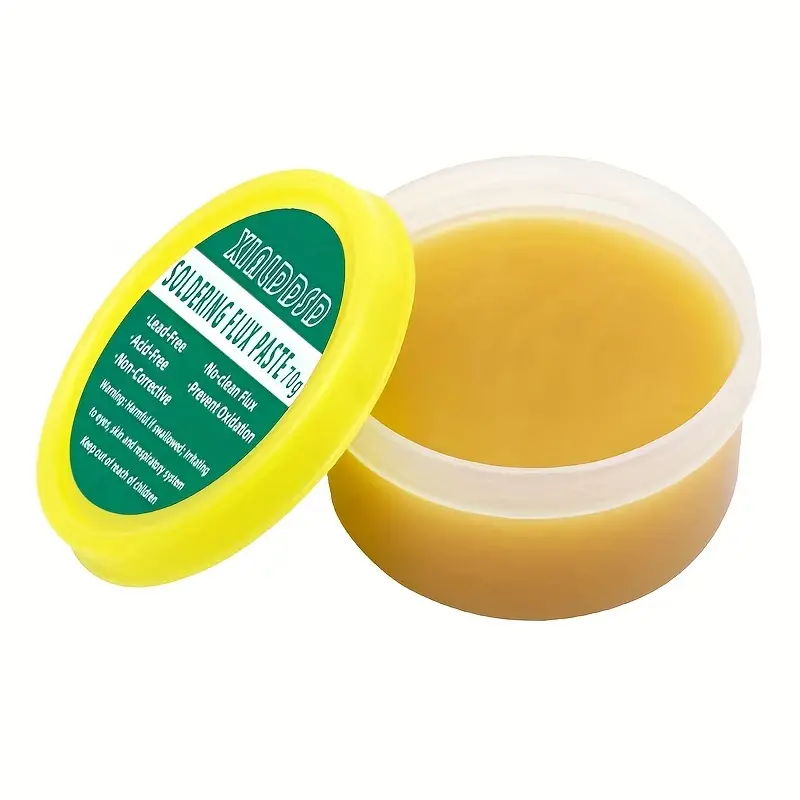
1pc soldering paste mild rosin environmental soldering paste flux pcb ic parts welding soldering gel tool for arrow metalworking 1

Monday, 21 February 2022

Surface Mount Soldering - Light- Box

This morning I was struggling with soldering a TQFP64 package. As I was inspecting for soldering defects I by chance discovered something something many will know - shining a bright light from the reverse side of the PCB can be very helpful.

I quickly rested the board on a frame over the bright light and attempted some touch up work. Wow! So much easier to see if those pesky solder bridges were being wicked away or otherwise being corrected. Later in the day I went to the shop with my better half, planning to swing by the hardware shop for some timber to make something more suitable. Left to my own devices I wandered around and stumbled on a bamboo organiser type box for around $10. Dimensions 12.5cm (H) x 17.8cm (W) x 31cm (D)


Flipped upside down with a hole and homemade LED light source mounted below the hole I now had a light-box for SMD soldering. 

No light


Light On

With the light on I can easily find solder bridges, whiskers and remnant flux. I can apply solder wick, or iron plus flux, to a bridge and easily see if it has corrected the problem.

Well worth the effort to make and it will be a huge timesaver for years.

73's

Richard

Wednesday, 29 July 2020

Chinese Solder - An update

After months of using different solders I have updated my findings. Only 2 of the Chinese sourced solders I tested are a realistic alternative to the comparatively expensive Multicore solder. Thoughts? Opinions? Comments welcome.

73's


Friday, 11 January 2019

Chinese solder

Well, I found a few I like.

This you tube video, despite all it's faults, clearly shows what I have experienced. You can see how the poor quality solder does not melt at the contact between hte solder and the joint. It turns to mush unless the heat goes way up. A sure sign of impurities and definitely not 60/40 solder. I like how you can see the heat flowing up the solder wire and discolouring it. Presumably that is the flux being burned off.

Does extra flux help? Yes, and no. Some of the brands I have tested almost get a recommendation with extra flux. But only a couple of brands met with my approval.


Thursday, 11 October 2018

Solder - further testing of Chinese brands

Well, I tried a few more brands of Chinese solder. One was actually very good but I haven't time tonight to track down a picture for the summary.. I will though, because I will be buying more of it.

In the meantime I do not recommend this brand:
For a moment this looked like a surprisingly good solder.

I was wrong. What appeared to be good joints too often turned out to be dry joints.And this was a thick 0.8mm solder wire. I shudder to think how poor a thinner wire from this manufacturer would have been.

Monday, 3 September 2018

Solder - The Good, Bad and Ugly of Chinese Solders

So I've been really busy for too long now on work matters. One aspect of that was hand soldering SMD boards. As I looked at my dwindling spools of solder I thought it would be useful to order some more. But yikes, the cost was surprising. So I thought I would test a few varieties from Chinese sources.

The results were generally disappointing. Here then is a brief summary of what I found:
 I do wonder how the Chinese can manufacturer so many electronic products without good quality solder. It must exist, but so far I have not found anything that matches what the manufacturers must be using.

I will try a few more rolls from different manufacturers in due course. If you have found something that works, I'd like to hear about it as would anyone else reading this.

73's